23
,
2026
How to Design a More Meaningful Life and Work
Bill Burnett on the Mindsets that Matter

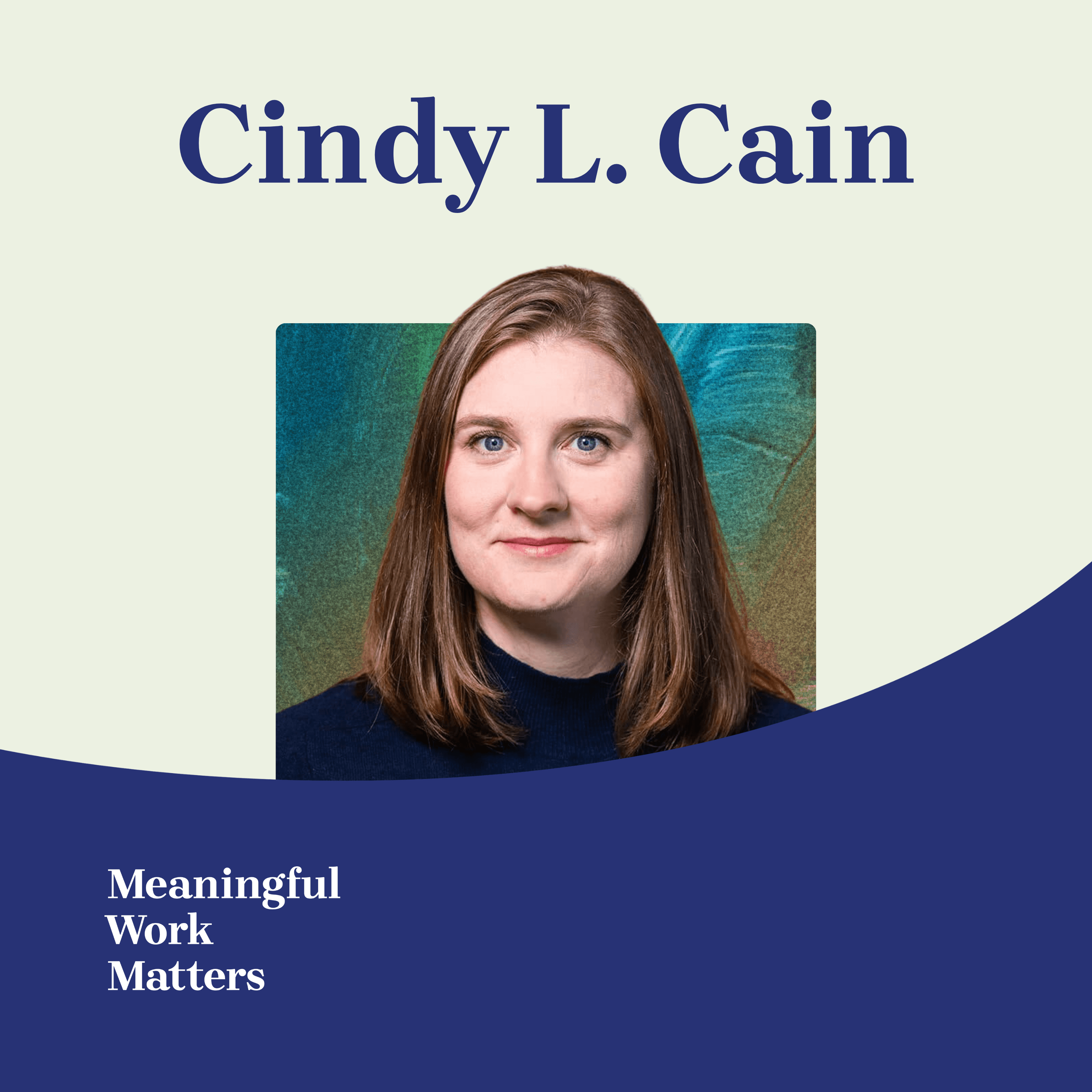
In this episode of Meaningful Work Matters, host Andrew Soren is joined by Stanford design leader and life design pioneer Bill Burnett for a conversation about what it means to build a meaningful life, and why that question is bigger than work alone.
Bill brings a design thinking lens to the topic meaning: how do we move beyond transactional living and create a life that feels psychologically rich, connected, and fully alive? Together, he and Andrew explore a set of practical mindsets that can help us approach our lives with more curiosity, flexibility, and intention.
They also talk about an important tension in the meaning conversation: while meaningful work can be a powerful source of energy and purpose, it can also tip into obsession, burnout, and exploitation when our identities become too tightly wrapped around it. Bill offers a refreshing alternative that expands meaning beyond career success and into community, experimentation, and the relationships that shape who we become.
Meaningful work matters deeply. It can energize us, shape us, and help us feel that our effort is connected to something worthwhile. But as Andrew Soren’s conversation with Bill Burnett makes clear, there is also a risk in putting too much pressure on work to carry the entire weight of a meaningful life.
Bill does not dismiss meaningful work. He has spent years helping people think more intentionally about work, life, and purpose through the lens of design thinking. But he also widens the frame. In this episode of Meaningful Work Matters, he invites us to think about what it takes to build a meaningful life: one that includes work, but is not dependent on it.
That shift matters, especially now. Many professionals are trying to navigate a culture that swings between two extremes. On one side is purely transactional living: productivity, deadlines, performance, and output. On the other is a more romanticized version of purpose that can quickly slide into obsession, over-identification, and burnout. Bill offers another path: one grounded in curiosity, experimentation, community, and a set of practical mindsets that help people design lives that feel more fully alive.
About Bill Burnett
Bill Burnett is an engineer, designer, educator, and one of the most recognizable voices in the life design movement. He is the co-founder and executive director of the Stanford Life Design Lab, where he and his colleagues help people apply design thinking to life, education, and vocation. Before Stanford, Bill worked across startups and major companies, including Apple, where he designed award-winning laptops, and the toy industry, where he worked on Star Wars action toys. He also holds multiple mechanical and design patents and has advised a range of student and startup ventures.
He is best known as the co-author of Designing Your Life and Designing Your New Work Life, books that helped popularize the idea that many life and career questions are “design problems” rather than problems that can be solved through one perfect answer. In this conversation with Andrew, Bill extends that same practical wisdom into a deeper exploration of meaning: how we find it, how we lose it, and how we might build lives that are rich, sustainable, and connected.
Meaningful Work Matters. But It Is Not the Whole Story.
One of the most useful threads in this episode is Bill’s insistence that work is only one part of a meaningful life. That sounds obvious at first. Most people would probably agree with it in theory. But in practice, many of us live as though work is the central proof of whether our lives matter. We look to our jobs not just for income or challenge, but for identity, belonging, purpose, contribution, growth, and even emotional validation. That is a lot for any one domain of life to hold.
Bill names the problem clearly: jobs are not inherently designed around meaning. Work can absolutely be meaningful, but it is not always built to supply the full range of human needs. And when we expect it to do too much, we open ourselves up to frustration, exhaustion, and disappointment. This is especially true the more our work is personally significant and important.
This is part of why Bill uses the phrase, “fully alive by design.” It points to something larger than career fulfillment. The goal is to build a life that feels engaged, coherent, and alive.
A Design Thinking Approach to Life
Bill’s gift is in helping people see that life is not a linear problem with one correct answer. It is a design challenge.
That means a few important things.
First, you do not have to know the perfect destination before you start. Designers rarely begin with total certainty. They prototype. They test. They notice what works. They stay open to surprise.
Second, design thinking assumes that action teaches. Rather than waiting to feel fully resolved, you try something small and learn from it. That is especially helpful for people who feel stuck, overthink major decisions, or assume they need one grand purpose before they can move.
Third, design thinking is grounded in human reality. It starts where you are, not where you wish you were. That is where Bill’s mindsets become practical ways of paying attention and moving through the world that help us become more responsive, less brittle, and more capable of building meaning over time.
Wonder Is Not Fluffy. It Is a Way of Paying Attention.
One of the mindsets Bill returns to is wonder. It’s a word we may think sounds soft or decorative, as though it belongs only to poetry or a good vacation. But Bill treats wonder as a way of noticing what catches your attention, expands your perspective, or interrupts the flattening effect of routine. In a life dominated by transactions, wonder is a corrective. It pulls us out of autopilot. It reminds us that meaning is something we can encounter unexpectedly at any moment.
There is a useful connection here to the growing body of research on awe and prosocial behavior. Studies popularized by Dachner Kelter have suggested that awe can quiet self-focus and increase feelings of connection, generosity, and openness. Bill is making a similar claim: experiences of wonder help us feel part of something larger than ourselves. They stretch us beyond utility and back into aliveness.
Fully Engaged, Calmly Attached
If there is one line from this episode that feels especially sticky, it is Bill’s phrase fully engaged, calmly attached. It captures a tension that many thoughtful, high-capacity people know well. We want to care deeply about our work and our lives. We want to commit. We want to bring energy, attention, and love. But we also know the cost of becoming too attached to outcomes. That is when meaning can curdle into control, anxiety, or overwork.
Bill offers a healthier stance: be all in, but hold the outcome more lightly. We’re not talking about indifference, or distance. It is a mature form of engagement that allows commitment without collapse.
This idea is especially relevant for leaders, founders, caregivers, educators, and anyone in mission-driven work. People in those roles often do not struggle because they care too little. They struggle because they care so much that every setback feels personal. The phrase “fully engaged, calmly attached” gives us a more sustainable target. Care deeply, yes. But do not let every outcome determine your worth, your peace, or your identity.
Radical Acceptance and Availability
Bill also talks about two other mindsets that are worth bringing down to earth: radical acceptance and availability. That mindset matters because energy gets wasted when we keep arguing with reality. Acceptance does not solve everything, but it gives us solid ground to stand on.
Availability is what allows us to meet life with more openness. It is the willingness to notice what is emerging rather than gripping too tightly to one rigid script. Sometimes the next meaningful step is not the one we planned. It is the conversation we did not expect, the invitation we almost dismissed, or the small experiment that opens a new possibility. Together, these mindsets make life feel less engineered and more alive. They help us trade perfection for responsiveness.
Community Is Not Optional
Bill emphasises the importance of formative communities in our lives. A formative community is more than a support system. It is a community that shapes you. It helps call forth the person you are becoming. It offers reflection, challenge, encouragement, and belonging in a way that changes your trajectory.
The modern meaning conversation can become extremely individualistic. We focus on personal goals, personal alignment, personal growth, personal fulfillment. But human beings are not self-contained projects, in fact we are formed in relationship.
This is one reason the episode feels so timely. It lands in the middle of a broader public conversation about loneliness, disconnection, and the erosion of communal life. Bill’s emphasis on formative community gives that issue a more practical and hopeful shape. Meaning does not come only from what we accomplish. It also comes from the people who know us, challenge us, and help us become more fully ourselves.
For workplaces, this has real implications: Culture extends beyond engagement or morale, it is also about whether people are part of communities that develop them in worthwhile ways.
The Dark Side of “Too Much Meaning” at Work
Meaningful work is not always protective. Sometimes it makes people easier to exploit. If the work feels important enough, we tolerate unhealthy expectations, blurry boundaries, chronic overextension, or a loss of life outside the role.
Bill speaks candidly about this tension because meaning can become obsessive and purpose can become consuming. Even a strong mission can quietly erode rest, relationships, and perspective. Bill’s response? Lean toward breadth: Breadth of identity. Breadth of belonging. Breadth of sources of aliveness.
That may include friendships outside work, local community, creativity that is not monetized, practices that reconnect you to your body, and forms of service or play that remind you you are more than your role. Meaningful work is safer when it is nested inside a wider life.
Research and Ideas Behind This Conversation
Bill’s work is rooted in design thinking, the approach to problem-solving popularized in product and innovation settings and then adapted at Stanford for life and career questions through the Life Design Lab.
The conversation also touches the legacy of Mihaly Csikszentmihalyi’s work on flow, particularly the idea that some of our most meaningful experiences come when we are deeply absorbed, less self-conscious, and fully present in what we are doing. Bill’s reflections on engagement and aliveness resonate strongly with that tradition.
Andrew and Bill also brush up against wider positive psychology and wellbeing research, especially in their attention to awe, purpose, human flourishing, and the social dimensions of a good life. And their discussion of community lands squarely alongside current public health concern about social disconnection, including the former U.S. Surgeon General’s advisory on loneliness and isolation.
5 Practical Takeaways From This Episode
Here are five ways to apply Bill’s ideas without turning them into another self-improvement project:
1. Ask a better question than “What is my purpose?”
Try asking: What makes me feel more alive lately?
This is often a more honest and actionable entry point than searching for one grand answer.
2. Notice your moments of wonder.
Keep a short note on your phone or in a journal for one week. Write down when something catches your attention, opens your perspective, or gives you energy. Those moments are data.
3. Practice being fully engaged, calmly attached.
Pick one important meeting, project, or conversation this week and enter it with full presence, but without demanding a perfect outcome. Measure success by the quality of your participation, not just the result.
4. Audit your sources of meaning.
If work became unstable tomorrow, where else would meaning come from? Relationships, service, community, creativity, learning, faith, movement, place, play, this is worth knowing before burnout forces the question.
5. Invest in one formative community.
It should be a real group of people who help you become better, braver, wiser, or more grounded. Meaning grows faster in good company.
What Bill Burnett offers in this conversation is not a tidy formula for the perfect life. It is something better: a more generous, more practical way to approach meaning. That is a bigger and more humane vision than the usual career advice allows. And for many people, it may be the difference between chasing meaning and actually building a life that feels fully alive.
_____
For readers who want to go deeper: Designing Your Life, Designing Your New Work Life, the Stanford Life Design Lab, Designing Your Life resources and worksheets, and Bill and Dave Evans’ newsletter Fully Alive by Design.