February
24
,
2025
Balancing Generosity and Boundaries Part 2
Lessons From Reb Rebelle
IPPA 2025
,
Leadership & Management
,
Meaningful Work
,
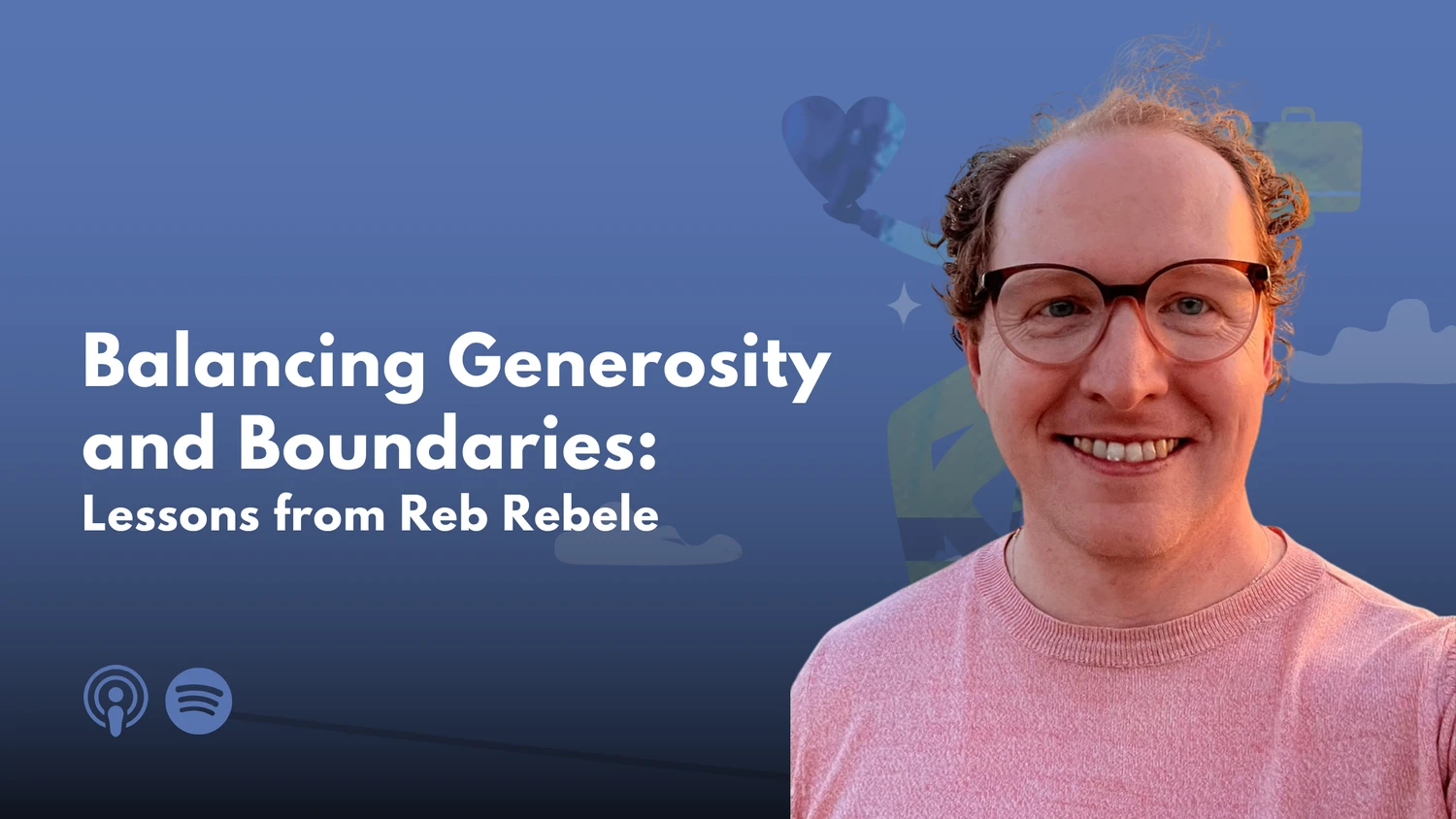
In Part Two of our conversation with Reb Rebele, we explore a paradox: while collaboration and generosity are essential elements of meaningful work, they can become counterproductive when not properly managed.
Building on our previous discussion about personality dynamics, Rebele reveals how organizational practices around collaboration and helping behaviors often undermine the very outcomes they aim to achieve.
The Hidden Costs of Being the "Go-To" Person
Rebele's research with colleague Rob Cross reveals that collaborative activities in organizations have increased by over 50% in recent years. This surge represents a fundamental shift in how work gets done.
"Even before the pandemic pushed everybody onto Zoom," Rebele explains, "time spent at work in collaborative activities had ballooned by 50% or more."
The consequences of this shift are counterintuitive.
Through network analysis studies, Rebele and Cross found that employees with reputations for being effective information sources and helpful colleagues often face the highest risk of burnout and turnover. "You become known as the really helpful, smart, good information source person. It sets the seeds for your potential demise in that organization," Rebele notes. This pattern creates a paradox where organizations inadvertently drive away their most valuable collaborators.
The rise of remote work has intensified these challenges.
Rebele points to Microsoft's research on the "triple peak workday," where employees now face three distinct peaks of collaborative activity—morning, afternoon, and a new post-dinner surge. This pattern suggests that rather than creating more flexibility, hybrid work may be expanding the collaborative demands on our time.
The Generosity Burnout Trap
Parallel to the collaboration challenge, Rebele's research with teachers showed that the most selfless educators had students who achieved less than teachers who maintained healthy boundaries.
"We think about self-development often as kind of a selfish activity," Rebele observes. "We discount the fact that if I take that time now, it might make me even better at helping people later on."
This insight challenges the common assumption that more helping is always better, and instead suggests instead that sustainable impact requires balancing generosity with self-care.
Systematic Solutions for Sustainable Collaboration
Rather than treating excessive collaboration as an individual problem, Rebele advocates for systematic organizational approaches.
One example is Dropbox's innovative experiment with a "meeting reset," where the company temporarily removed all recurring meetings from calendars and established new norms around meeting participation. This intervention allowed teams to rebuild their collaborative practices more intentionally.
Rebele also recommends practical strategies for individuals:
Creating a "help network map" to understand patterns of giving and receiving assistance across your professional relationships. This exercise reveals not just who you help, but also identifies potential resources you might be underutilizing.
Developing what Brian Little calls "restorative niches"—spaces and times for recovery between collaborative demands. These can range from two-minute breaks between meetings to longer periods of focused work.
2 Minutes
Deep breaths
Look out a window
Quick stretch
2 Hours
Proper lunch break
Walk outside
Exercise
2 Days
Engage in hobbies
Time in nature
Complete disconnection
2 Weeks
Full mental rest
New environments
Passion project
Reimagining Collaboration for Meaningful Work
The challenge, Rebele suggests, isn't to eliminate collaboration but to make it more purposeful.
"We need to manage it well, and we need to think about how to manage it together, because our default behaviors very often lead us into a place where we get more of the worst of both worlds."
This means rethinking traditional approaches to workplace interaction.
For instance, rather than defaulting to standard hybrid work policies focused on days per week in the office, organizations might consider alternative structures like monthly or quarterly in-person collaboration periods.
The goal is to create conditions where both connection and individual work can thrive.
As Rebele notes, "Collaboration is important to the organization...It's where a lot of good ideas come from. It's also really important to employees...It's the social side of meaningful work."
Looking Forward
The insights from this conversation suggest a framework for thinking about collaboration and generosity in the context of meaningful work. Rather than maximizing these behaviors, the focus shifts to optimizing them—creating sustainable practices that enhance both individual wellbeing and organizational effectiveness.
By understanding the dynamics of collaboration and generosity, we can build work environments that support meaningful connection without leading to burnout.