2
,
2026
What the Masks Leave Behind
A Conversation with Llewellyn E. van Zyl and Andrew Soren
Meaningful Work
,
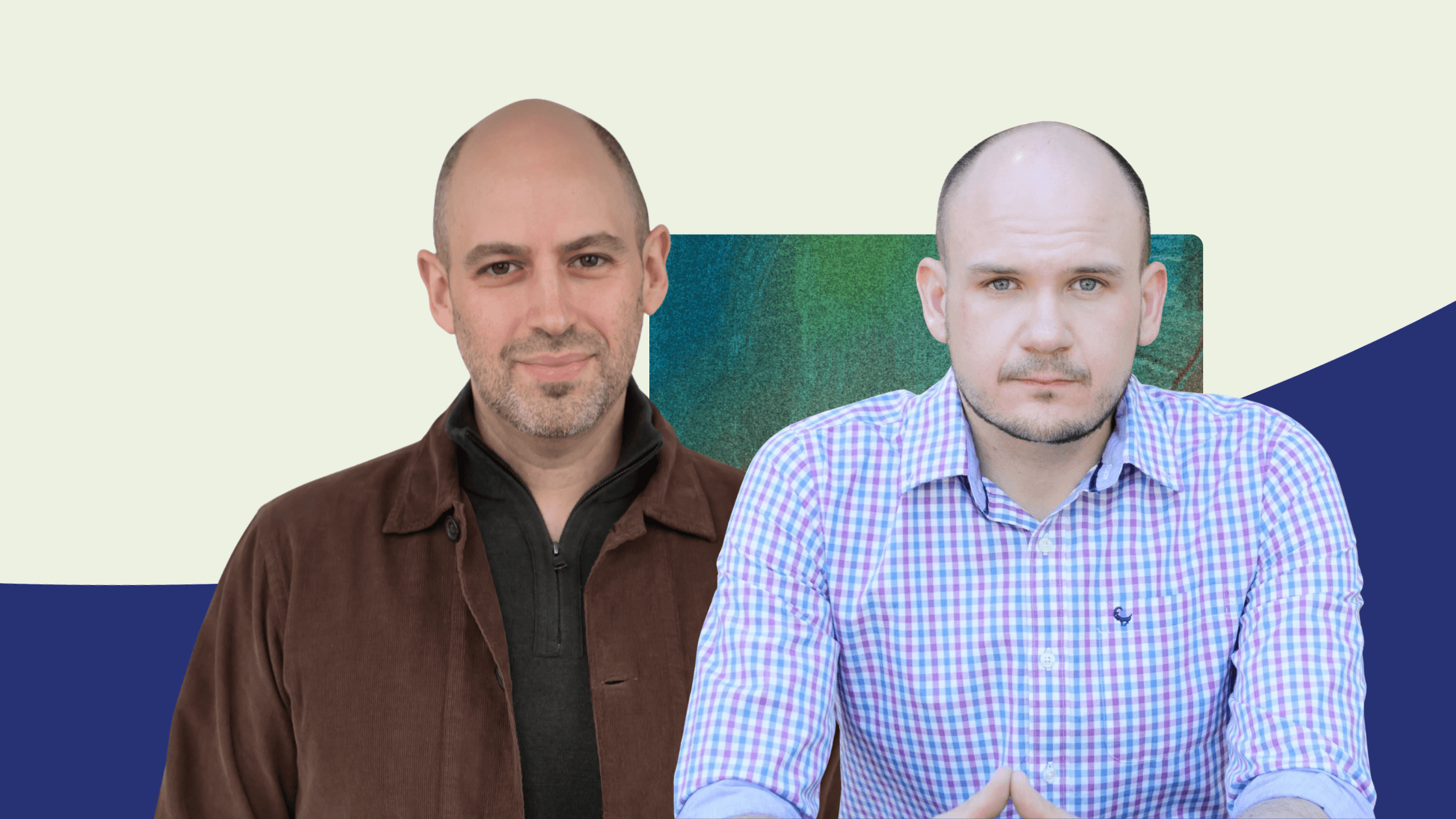
Dr. Llewellyn E. van Zyl, professor of positive psychology, data scientist, and Program Chair of the upcoming IPPA Virtual Summit on AI and Wellbeing, returns to the Meaningful Work Matters podcast.
But this time, he’s the interviewer, and the person in the hot seat is host, Andrew Soren.
Llewellyn came to this conversation with a question about Andrew he couldn’t shake: what happens to the person underneath when they keep becoming someone new?
Rather than a conversation about frameworks or research, this is a conversation about lived experience. What transformation actually feels like, what suffering teaches that scholarship cannot, and what remains when all the roles fall away.
The Stage Was Never Just a Stage
Andrew's career began in theater, and in many ways it never left. He trained at a performing arts high school, produced contemporary theatre and ballet in Toronto, and found himself drawn not to the spotlight but to what he came to call the role of the impresario — bringing people with different skills together into something greater than the sum of their parts.
When he moved into leadership development and eventually positive psychology, he kept returning to the same theatrical concept: mise en scène, the conditions a director must design to make an experience possible. The question he was always asking was how to design the conditions for people to show up more fully as themselves.
What You Lose Every Time You Become Someone New
When Llewellyn asks what gets left behind in transformation, Andrew recalls a specific memory. Moving to Uruguay with his partner, arriving at a hardware store on the first morning, unable to find the word for plunger, unable to make sense of the prices, unable to do the most basic things he had always taken for granted. The part of him that believed he was competent — his sense of self-efficacy — had simply disappeared.
He recognizes the same pattern across every major transition:
"Every time I've had to make a career shift, there is a little piece of you that kind of has to die. One door closes so that another door opens."
What Andrew describes is the grief that accompanies growth — a loss worth taking seriously rather than rushing past. And drawing on the actor's craft, the practice of borrowing from emotional memory in past experiences, he has learned to rebuild his footing by looking back at where he has succeeded before and trusting that the pattern holds.
Listening to Tension
Andrew talks about learning, over decades, to use the harmony and dissonance he feels in different roles as a navigational instrument. When the different parts of who he is are in productive tension, something like harmony becomes possible.
When they pull against each other in ways that resist resolution, the dissonance becomes impossible to ignore.
"Tensions can be harmonious and tensions can be dissonant. You need different notes. And if the different notes are working with each other, you have harmony. If that tension is failing, you have dissonance. Attuning yourself to that can give you a tremendous amount of information."
Positive psychology taught him something important here.
Because dissonance is loud and urgent, it can consume all available attention. Andrew references David Cooperrider's observation that we move in the direction of the questions we ask. Asking only about what is wrong moves us toward more of it. Asking about where harmony exists, even imperfectly, opens a different kind of motion. The practice of sitting with tension, naming the values it represents, and working through it is, for Andrew, the actual work of sensemaking across every shift he has navigated.
Meaning Has a Dark Side
Llewellyn brings up Andrew's collaborative work with Carol Ryff on the purpose and function of meaning and asks a pointed question. The research is clear that meaning matters deeply to wellbeing. The paper also acknowledges that meaning can wear us down.
Andrew draws from his own experience. In the arts, meaning had the potential to be a site of exploitation, often structural rather than intentional. People who work in underfunded, passion-driven fields absorb the costs personally, trading financial security for the sense that what they're doing matters. At the bank, he experienced a different version of the same tension — running a program that felt morally vital while operating inside a system whose primary measure of success was selling financial products.
Suffering, he argues, is intrinsic to meaningful work rather than incidental to it. The mistake is thinking we can design it out.
"We don't want to remove meaning from people's lives because meaning might involve some suffering. What we want is for people to be able to do that meaningful work and for it not to kill them."
The more useful question, and the one he thinks positive psychology is well positioned to help answer, is how to suffer well. How to stay inside meaningful work without being consumed by it. How to hold the difficult days without losing sight of the direction you're moving.
What Remains
At the close of the conversation, Llewellyn asks Andrew to set everything aside — all the roles, the masks, the career — and speak from whatever is most essential. What he wants people to know from that stripped-down place turns out to be simple, and largely unchanged since he was a child wanting to get on a stage.
"Who am I, and how do I bring more of that into what I'm doing? That's always the question. No matter what role I've been in, no matter what mask I've had, no matter what job I'm doing."
Eudaimonia turns out to be the grown-up version of what he was always asking. Llewellyn notices that Andrew's language shifted across the conversation, moving from performance and orchestration toward something more about being than doing. He wonders whether Eudaimonic by Design played a role in that.
And it’s a good question to sit with.
Llewellyn van Zyl joined the show previously as a guest. You can find that conversation, The Risks and Rewards of AI for Well-Being: Lessons from Llewellyn van Zyl, in our podcast archive.
Llewellyn is also the Program Chair of the IPPA Virtual Summit on AI and the Future of Wellbeing, taking place March 23–27, 2026. Andrew serves as Executive Director of the International Positive Psychology Association.
You can learn more and register at: aisummit.ippanetwork.org.